
Health as a Portfolio: Practical Insights
and Steps to Support Your Well-being
Health and wellness can often feel intimidating and overwhelming as there is rarely a one-stop solution to suit everyone. It is important to identify what works best on an individual basis to ensure we can best look after ourselves and our well-being. This article aims to demonstrate smaller, more practical steps that can be taken to support your health.
What is a “Health Portfolio”?
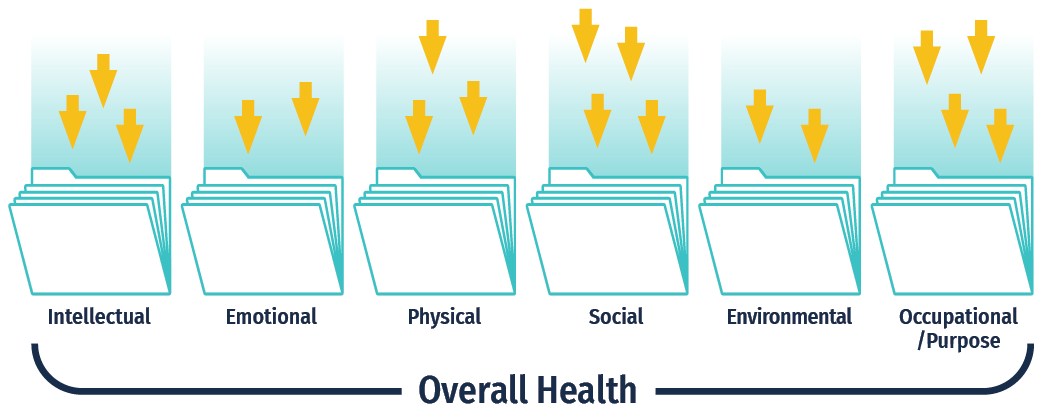
Adopting new, healthier habits can be challenging, so it is important that they feel tangible and applicable to your daily life. Describing our health as a portfolio can help identify the different assets that add up to help us feel well. It can be helpful to think of the small actions taken as daily “deposits,” each contributing to your overall account of health.
Intellectual Dimension
What does this include?
Tapping into intellectual wellness can contribute to our overall health by providing ways to open our minds to new ideas, stimulate our cognitive capacity and expand our existing knowledge and skillset. Leaning into our curiosities allows us to explore novel activities, ways of thinking, expression and reflection, all of which can contribute to a healthier mind.
Small steps you can take:
- Reading – Digging into a new book can be a fantastic way to learn new vocabulary and broaden perspectives. What you read is up to your discretion and anything that expands your experience, understanding or knowledge is a great start. If it stimulates your curiosity or generates interest, it’s worth a read. Your mind will thank you for the digital detox and the calming effect reading can have1.
- Trying new hobbies (or spending time on existing ones) – Hobbies provide a mental break, allowing your mind to pause from the day-to-day routine. Engaging in enjoyable activities fosters positive emotions and can increase feelings of purpose and accomplishment. Taking on something new can boost self-esteem and confidence, contributing to overall wellness2.
- Journaling – Writing can provide a space to process emotions, reduce stress, enhance creativity and improve memory. These facets can contribute to intellectual well-being by encouraging self-understanding and reflection3. In other instances, people may use journaling as a tool for stress management or to navigate experiences of anxiety or recovery.
- Exploring outdoors – By being present in nature, our minds can restore their attention to the surrounding environment. Research shows that by being outdoors, the brain can shift from the demanding focus required for daily tasks to a feeling of awe, where sights and sounds capture our attention4. This can reduce stress hormones and promote feelings of calmness, often lending us greater mental clarity.
Emotional Dimension
What does this include?
Our emotions and feelings can be overwhelming at times. Daily, we experience a spectrum of different sentiments, and our reactions to these can enable us to practice better emotional wellness. Developing emotional wellness can aid us in understanding, accepting and managing our emotions constructively while also adapting to life’s changes and stresses. Emotional health contributes to our health portfolio and prioritizing it can help improve your overall quality of life5.
Small steps you can take:
- Identifying emotions – Taking a moment to sit with and identify what you are feeling can create more understanding and compassion for yourself and others. It’s easy to write emotions off as ‘irrational’ or ‘unnecessary’ but taking the time to observe and process them can contribute to greater emotional flexibility.
- Accept how you are feeling – There are no right or wrong emotions; they exist along a spectrum of the human experience. It is important to develop the ability to experience and appropriately express a wide range of emotions such as joy, fear, grief, frustration, gratitude and sadness. It is key to understand that most emotions are temporary and that you should not judge yourself for having them – this will relieve the internal pressure you feel and can help with addressing challenging feelings with more clarity.
- Practicing mindfulness – Mindfulness can seem like a tricky word to interpret, but the core idea is to encourage us to pay attention to the present and the thoughts and feelings that accompany it. Bringing ourselves to the current moment can help filter out external stress or unhelpful worries, allowing for deep breaths to be taken and calmer feelings to arise. Many people find that even taking 30 seconds to ground their feet and breathe deeply can act as a mental reset.
- Know when to seek support – If you are struggling to cope with your emotions or your symptoms seem uncharacteristic or persistent, additional support could help you discuss these feelings further. A therapist or counsellor can be useful in these instances. If you feel comfortable, you can connect with your manager to see if there is an EFAP service available to you. Please see the resources section below for some additional links.
Physical Dimension
What does this include?
Physical wellness is the ability to care for your body through functional health, proper nutrition, sufficient sleep, and regular physical activity. Physical wellbeing is an essential component of the overall health portfolio. Tuning into your body’s needs promotes more than just your physical health but also contributes to your emotional and intellectual wellbeing.
Small steps you can take:
- Exercise and movement – Moving our bodies is essential to our overall well-being and can offer a wide range of benefits. Motivation can be difficult, so joining a class or communal exercise group can boost enjoyment and self-esteem as you have the support and companionship of others. It is important to find an activity that is accessible and enjoyable to you, so exploring different types of exercise and movement can be a great way to find out what works best for you. Further information is noted in the resources section below.
- Food and nutrition – Our bodies require fuel to keep us going and maintain health. Focus on foods that feel nourishing and satisfying; these will provide you with the energy you need for your day. Ensure you are drinking enough water, as remaining hydrated is also key in feeling physically well. Suitable food and nutrition can help increase energy levels and mood;however, making healthy choices around food means discovering what works best for you and your body.
- Sufficient sleep – Research indicates that poor sleep quality can have a negative effect on your cognitive abilities, mood, immune health and physical health. A good sleep schedule is one of the most important things you can do to optimize your health.
- Reduce caffeine intake
- Reduce blue light exposure in the evenings
- Aim to sleep and wake at consistent times
- Consider the noise, temperature and ventilation levels in your bedroom
Social Dimension
What does this include?
Social well-being can be defined as developing and maintaining positive interactions with other people as well as with local and global communities6. Social wellness plays a crucial role in overall happiness and life satisfaction and are linked to better mental and physical health outcomes.
Small steps you can take:
- Nurture new and existing relationships – Social bonds and support can reduce stress and positively influence our wider health. Connecting with your friends and family andmeeting new people has been shown to promote feelings of belonging and acceptance. Reach out to someone you may not have spoken to for a while, grab a coffee with a friend or chat with a stranger while waiting in line – all these social interactions offer a social benefit.
- Practice empathy and listening – Empathetic listening builds deeper, more meaningful connections, trust and positive interactions with others. It also helps to improve effective communication skills by better understanding the people around you. By focusing on what someone is telling us, we can respond in a more thoughtful and constructive way.
- Engage with community – Making connections with a local or global community can provide a vital support system. Community offers emotional support, a sense of belonging and shared experience, all of which contribute to overall wellbeing and positive mental health outcomes. Communities are often founded on mutual interests and experiences, by tuning into your own you may be able to seek collective opportunities.
Environmental Dimension
What does this include?
Environmental wellness involves how we interact with nature and the built spaces to which we live, work and have access . The balance between home and work life can often see us indoors with little time in the natural environment. This dimension also includes evaluating our spaces for comfort and accessibility while minimizing the impact of potential deficits. These steps will help you identify opportunities to acknowledge and improve your surroundings7.
Small steps you can take:
- Spend time outside – Whether it be on your commute or a planned hike on the weekend, additional time outside can give you an opportunity to connect with yourself and the environment around you. This practice can also take place during a weekday lunch time, where you may opt to stroll with a colleague or eat your food outside.
- Make sustainable choices – Everything we buy and consume has an environmental impact. Some of the easiest ways to practice sustainability is to switch to reusable items (grocery bags, coffee cups etc.), exploring thrifted clothing, conserving energy and recycling or composting household waste.
- Decorate your space – If able, shifting your home’s setup or design can help create spaces where you can recharge and relax. Using your favourite colours for décor, keeping and growing plants, adding a pleasant scent or hanging pictures/art can all be simple and effective ways of curating a more welcoming environment. Our built environment also impacts our mood, so maintaining a clean and enjoyable space is essential.
- Reduce stress factors – It can be difficult to reduce stressors in shared spaces, but there are things that can be done to ease the impact. At work, this could mean organizing your desk, using noise-cancelling headphones, or taking regular screen breaks. In the outdoors, reducing stress may come from finding quieter green spaces to spend time in or choosing walking routes with less traffic. At home, it might involve decluttering, setting boundaries around shared space, or adding calming features like soft lighting. Even small adjustments can help create a more supportive and peaceful environment.
Occupational/Purpose Dimension
What does this include?
These are two separate dimensions that share a connection in that they are often areas of our lives that feed into one another: what we do for work and the broader purpose and ambition we may have for our lives. Occupational wellness refers to factors that are influenced by our work, with the overall aim to find work that feels satisfying, purposeful and allows us to grow both personally and professionally. The concept of purpose looks different to each individual, but the common theme is that our purpose provides the ‘why’ to our lives, it offers the ability to reflect, understand our strengths and consider our future aims.
Small steps you can take:
- Set achievable goals – Taking the time to think about what we want to achieve is key in driving our sense of purpose. When we align our values and ideas with our goals, we are better able to direct ourselves and achieve an outcome that fulfils us. These can be small, everyday tasks or grander, long-term plans – giving yourself the opportunity to lean into what brings you joy is essential for overall health.
- Balance work and life – This is easier said than done, but cultivating this balance is essential to maintaining your wellbeing. A clear definition of work hours, unplugging while not at work and scheduling time for breaks and hobbies are all smaller ways of incorporating more equilibrium into your life. If needed, ask for support and accommodations from your supervisor or manager.
- Reflect on what matters most – Understanding what you value and what is important to you may help you narrow down your purpose in life to something more attainable and meaningful. For some people, they value helping others, continuing their education or developing a certain skill. This is a personal journey, but tools such as the Valued Living Questionnaire can help you explore further.8
- Know your limits – Establishing healthy boundaries at work is key, know the limits of your workload capacity and avoid taking on anything additional that may cause excessive stress. Maintaining a clear line of communication with coworkers and managers can create a mutually beneficial relationship, allowing thoughts and concerns to be shared.
Takeaway Message
Ultimately, nurturing your “health portfolio” is a continuous process, not a one-time event. By making small, consistent deposits into each of these dimensions, be it intellectual, emotional, physical, social, environmental, or purposeful—you’re building a resilient and sustainable foundation for your well-being. Think of it as a long-term investment in yourself. Just as a diversified financial portfolio can weather market fluctuations, a well-rounded health portfolio can help you navigate life’s challenges with more energy, clarity, and purpose. It’s about building a more manageable and enjoyable life, one small step at a time.
References
- https://kwikbrain.medium.com/10-brain-reasons-to-make-reading-a-habit-aa628d4b498c
- Cleary, M., Le Lagadec, D., Thapa, D. K., & Kornhaber, R. (2025). Exploring the Impact of Hobbies on Mental Health and Well-Being: A Scoping Review. Issues in Mental Health Nursing, 46(8), 804–814. https://doi.org/10.1080/01612840.2025.2512006
- https://positivepsychology.com/benefits-of-journaling/
- American Psychological Association. (2025, April 8). Nurtured by nature. Monitor on Psychology, 51(3). https://www.apa.org/monitor/2020/04/nurtured-nature
- https://helpstartshere.gov.bc.ca/wellbeing/emotional
- Keyes, C. L. M. (1998). Social well-being. Social Psychology Quarterly, 61(2), 121–140. https://doi.org/10.2307/2787065
- https://uwaterloo.ca/engineering-wellness-program/the-nine-dimensions-wellness/environmental-wellness
- https://greatergood.berkeley.edu/article/item/seven_ways_to_find_your_purpose_in_life
Resources
- Care to Speak is a peer-based phone, text, and webchat service providing freeand confidential support to healthcare and social support workers in BC https://careforcaregivers.ca/caretospeak/
- The YMCA BC offers affordable, accessible and varied physical exercise classes – https://www.gv.ymca.ca/
- The City of Vancouver (COV) also offers fitness classes for the community – https://vancouver.ca/parks-recreation-culture/fitness-classes.aspx
- Mental Health and Wellness Resources and Supports https://www2.gov.bc.ca/assets/gov/family-and-social-supports/cymh-translated-documents/cymh-mental-health-resources-supports.pdf